ServicesCommercial Roofing
Commercial Roofing in Shady Shores
We install low-slope and metal roof systems on offices, retail buildings, churches and small warehouses. You get a written, line-item estimate, an honest read on how much life your current roof has left, and a schedule built around your business so the roof becomes a planned expense.
A roof you can budget for, not react to
Most commercial buildings sit under a flat or low-slope roof, and those roofs age differently than shingles do. Membranes shrink and pull at the perimeter, seam adhesion weakens, and water that should run to a drain sits in shallow ponds. The damage builds for years before a ceiling tile ever stains.
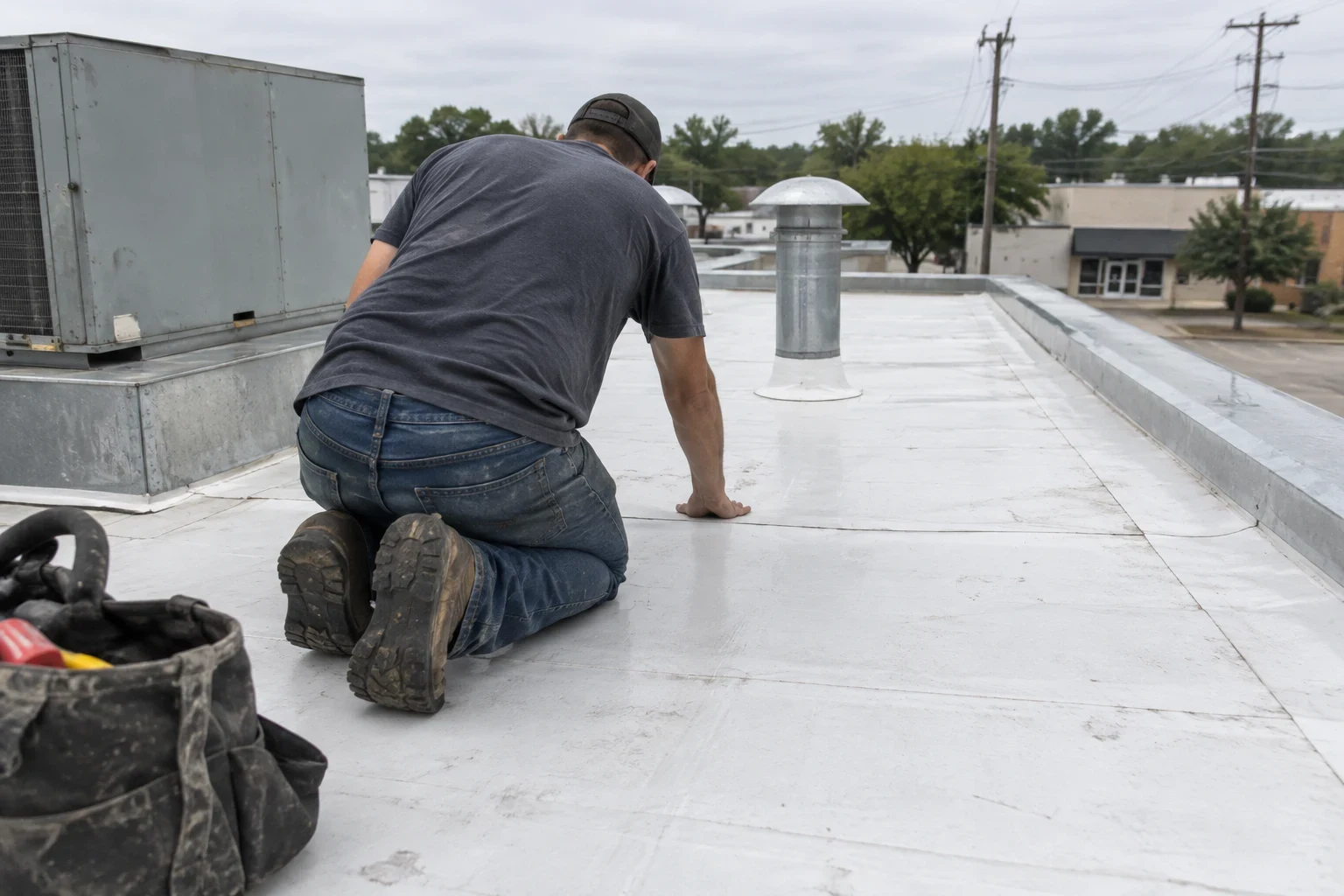
We put numbers and dates on that aging early. At the free estimate we walk the roof, check the insulation where readings suggest moisture, and photograph seams, flashings and drains so you can see what we see. If the roof has years left, we tell you, and we help you set money aside for the year it will not.
For pitched roofs on houses, see our Residential Roofing page. If the building also needs interior work, our Commercial Contracting service covers that side of the project.
Roof systems and details we install
- TPO single-ply membrane
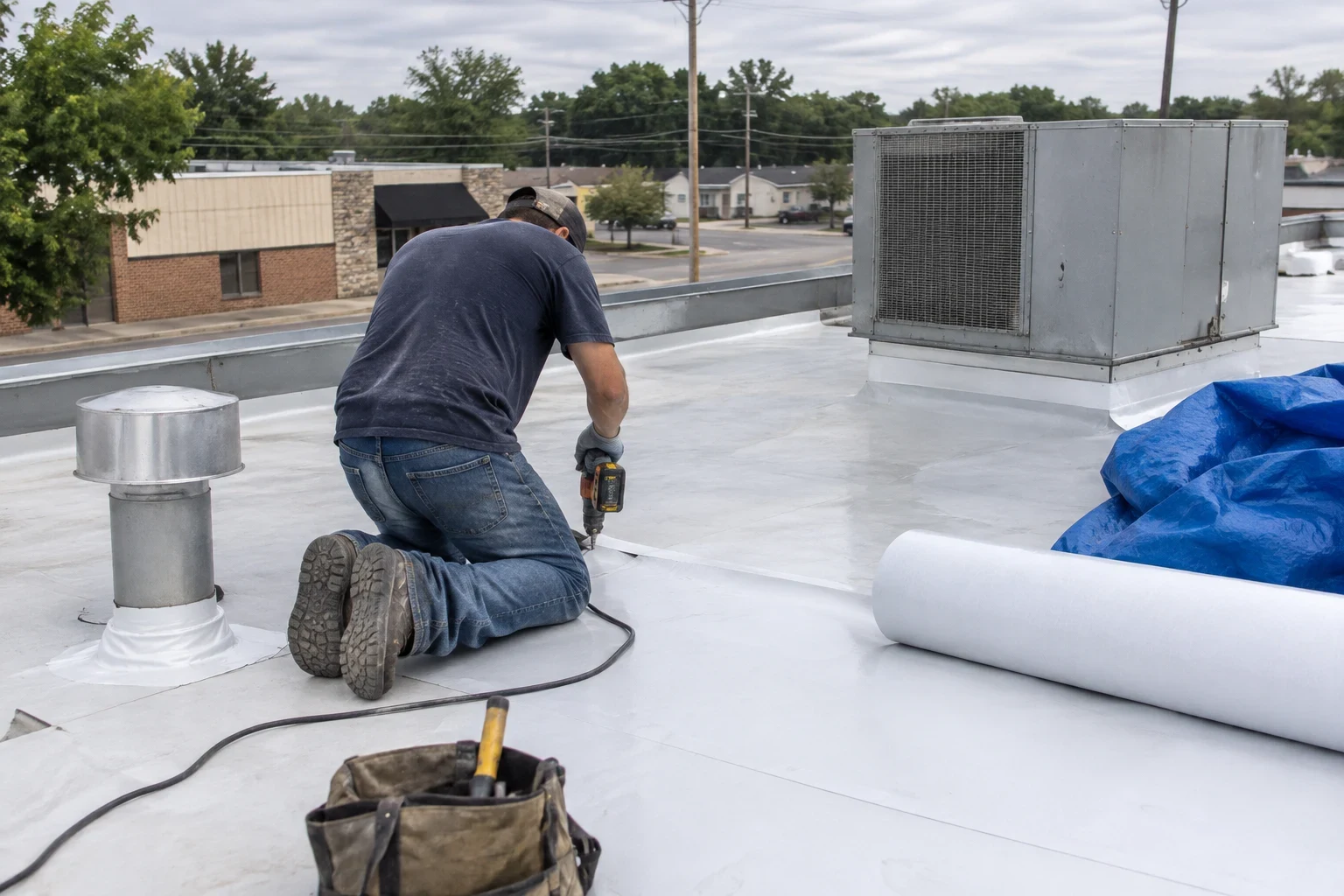
- TPO seams are hot-air welded, so the overlaps fuse into one continuous sheet. The white surface reflects summer sun and lowers rooftop temperature, which helps the units below run less.
- Modified bitumen
- A multi-ply asphalt system finished with a granulated cap sheet. It handles foot traffic around rooftop HVAC equipment better than thinner single-ply sheets.
- Metal roof panels
- For pitched commercial roofs and metal buildings we install standing seam or R-panel. Clip-fastened standing seam lets the steel expand and contract through North Texas temperature swings with fewer exposed screws to back out.
- Insulation and tapered slope
- Polyiso board sets the R-value of the roof. Tapered insulation builds a slight pitch toward drains and scuppers so water leaves the deck instead of ponding.
- Flashings, curbs and edge metal
- Wall flashings, pipe boots, HVAC curbs and coping caps are where most commercial leaks start. We detail each one to the membrane maker's published installation instructions.
- Roof coatings
- When the membrane is dry and well attached, a silicone or acrylic coating can push the next major project further out. That buys time to budget instead of spending in a hurry.
Signs your commercial roof needs planning now
Ponds that outlast the storm
A low-slope roof should shed rain within a day or so. When puddles linger well after the weather clears, a sagging deck, crushed insulation or a partly clogged drain is usually to blame, and that trapped water ages the membrane early while adding weight the structure was not meant to carry.
Open or lifting seams
Laps that peel back at the edges let wind get under the sheet. Once wind gets under it, the membrane flutters and the fastener plates loosen.
Blisters and alligatoring
On modified bitumen and older built-up roofs, bubbles and a cracked, scaly surface show trapped moisture and dried-out asphalt.
Stains near walls and units
Ceiling stains at exterior walls or under rooftop equipment usually trace back to flashing or curb details, not the open field of the roof.
Rising cooling bills
Wet insulation loses most of its R-value. If utility costs climb with no change in use, moisture in the roof is a likely cause.
Rust at metal laps and screws
Red rust around fasteners and panel overlaps means the coating has worn through and washers are failing.
What moves the cost of a commercial roof
We do not quote commercial roofs over the phone because the price depends on measurements and on what is under the surface. A roof's footprint tells us very little until we have checked the deck and probed the insulation, and that is where matching buildings often end up with very different totals. Every line of the written estimate is priced on its own, so tear-off, insulation and flashing costs are never folded into one lump number.
Square footage and layout
Size sets the material quantity, but layout matters too. Every HVAC curb, vent, skylight and parapet wall adds flashing labor.
System and thickness
A 60-mil TPO sheet costs more than 45-mil and lasts longer. Metal, modified bitumen and coatings each carry different material and labor costs.
Wet insulation and deck condition
Saturated insulation has to come out, and rusted or rotted decking has to be replaced before anything new goes down. This is the line most often unknown until the estimate visit.
Access and staging
Building height, crane needs, and how much parking we can use for staging all affect labor time.
Permits and energy code
Current energy code can require added insulation on a new roof, which raises edge heights and changes flashing work.
How a commercial roofing project runs
- 1
Free estimate visit
We measure the roof, note every penetration and drain, and check for wet insulation. You get photos and a plain explanation of the roof's condition.
- 2
Written proposal with options
The estimate is line-item: tear-off, insulation, membrane, flashings and edge metal priced separately. Where it makes sense, we show a coating option next to a new system so you can compare timelines and budgets.
- 3
Scheduling around your business
We pick dates that avoid your busiest hours and plan material deliveries, crane lifts and parking use ahead of time. We pull the permit where the city requires one.
- 4
Installation and daily tie-ins
Crews remove only what can be covered that day, and every section is sealed watertight before we leave. Entrances and walkways stay protected and clear of debris.
- 5
Closeout walk
We walk the finished roof with you, hand over photos of the work and explain what routine upkeep will keep it performing.
Commercial roofing questions
Can our business stay open while you work?
In most cases, yes. We schedule noisy tear-off and crane lifts for quieter hours when we can, keep entrances clear, and close up each section the same day so the building stays dry overnight.
Should we coat the roof or put on a new system?
It depends on what is underneath. A coating works over a membrane that is still attached and dry. If moisture readings show wet insulation across large areas, a coating would trap that water, and a new system is the better spend.
Do you offer a warranty on commercial roofing?
We provide a workmanship warranty on eligible projects, and coverage varies by service. At the estimate we will tell you which parts of your project qualify so it is clear before you sign.
How far ahead should we plan for a new roof?
Ideally a year or two. That gives you time to put the cost into a capital budget, pick a season with steadier weather, and avoid paying rush prices after a leak shuts down part of the building.
Do you work outside Shady Shores?
Yes. Our crews handle commercial roofs in neighboring towns such as Lake Dallas, Corinth, Denton and Lewisville. For the full list of communities we serve, check our Service Areas page.
Put your roof on the budget before it leaks
A free estimate gives you photos, measurements and a line-item number you can plan around. We will tell you whether the roof needs work this year or can wait.